 Give Missed Call for Home Loan +91 9706128128

 PMAY 2.0
 Pay EMI Online
 Download Loan App
Special Offers


 Give Missed Call for Home Loan +91 9706128128
 Special Offers

27-May-2026 | Affordable Housing
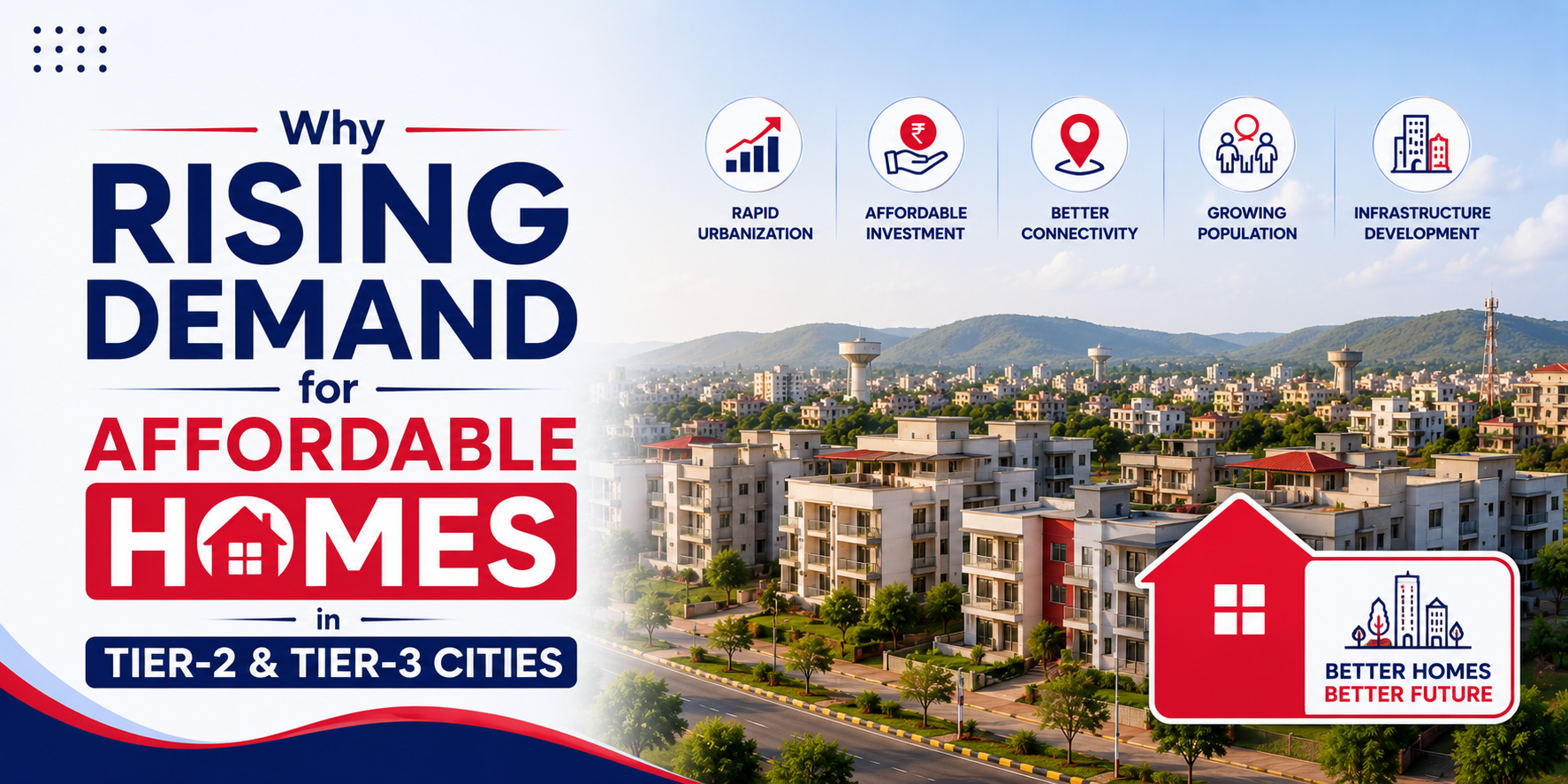
For many Indian families, owning a home in a metro city has become increasingly difficult. Rising apartment prices, high EMIs, limited space, and increasing living costs are pushing middle-income buyers to look for better and more affordable options.
This is one of the biggest reasons why affordable residential plots in Tier-2 and Tier-3 cities are witnessing strong demand today. Families with budgets between ₹15–25 lakhs are now exploring emerging suburban areas where owning land and building a small independent home is still possible.
Instead of spending years paying rent or buying tiny apartments in crowded cities, many first-time buyers are choosing plotted developments and budget housing opportunities in growing towns and city outskirts.
Why Buyers Are Moving Towards Affordable Suburban Areas
Over the last few years, infrastructure development in smaller cities has improved significantly. New highways, ring roads, railway connectivity, industrial corridors, and better public facilities are making Tier-2 and Tier-3 cities more livable and well-connected.
Because of this, areas that were once considered far from the city are now becoming affordable residential hubs for middle-class families.
For buyers with limited budgets, these locations offer:
• Lower land prices
• Bigger living space
• Lower construction costs
• Better long-term value
• Opportunity to own property instead of renting.
Many families now prefer buying a small plot in a developing suburb rather than purchasing an expensive apartment with limited carpet area.
Affordable Plots Fit Better Within ₹15–25 Lakh Budgets
One of the biggest advantages of emerging suburbs is affordability.
In many Tier-2 and Tier-3 cities, small residential plots are available at comparatively lower prices than metro apartments. Buyers can often find plots within ₹10–15 lakhs in developing areas and begin basic construction according to their financial capacity.
This makes independent housing achievable even for salaried individuals and lower-middle-income families.
Unlike ready-to-move apartments that require large upfront investments, plotted developments allow buyers to plan their spending gradually.
The Advantage of Building a Home in Phases
A major reason budget buyers prefer plots is the flexibility to build slowly over time.
Many families first purchase the land and then start construction with a basic ground-floor structure. As income improves, they expand the home by adding:
• An additional room
• A first floor
• Rental space
• Parking area
• Small commercial usage in future.
This phased construction model helps families avoid excessive financial pressure and large EMIs.
For many people, it is a more practical and emotionally satisfying journey toward home ownership.
Better Value Compared to Small City Apartments
In metro cities, even affordable apartments often come with:
• Small carpet areas
• High maintenance charges
• Parking limitations
• Shared spaces
• Long-term loan burdens.
On the other hand, a small independent house in a Tier-2 or Tier-3 suburb offers:
• Ownership of land
• More usable space
• Greater privacy
• Lower recurring costs
• Freedom to modify the house later.
For growing families, this becomes a better long-term option than living in compact apartments.
Infrastructure Development Is Increasing Property Demand
The demand for suburban plots is also rising because governments are investing heavily in infrastructure development beyond major metros.
Road expansion projects, industrial zones, schools, hospitals, and transport connectivity are improving the value of emerging locations rapidly.
Areas that are affordable today may become high-demand residential pockets in the coming years.
Because of this, buyers are not only looking at these plots for self-use but also as long-term assets for future appreciation.
Important Things to Check Before Buying a Plot
While affordable homes offer great opportunities, buyers should always complete proper verification before making a purchase.
Here are some essential checks:
1. Verify Property Documents
Ensure the land has:
• Clear ownership title
• Proper registration
• Legal residential approval
• Updated tax records.
2. Check Land Conversion Status
Agricultural land cannot usually be used directly for residential construction. Verify whether the land has proper residential conversion approval.
3. Confirm Basic Infrastructure
Check availability of:
• Roads
• Electricity
• Water supply
• Drainage
• Public transport connectivity.
4. Verify RERA Registration
If buying in a plotted development project, confirm whether the project is registered under RERA.
These checks help buyers avoid legal and financial issues later.
Why Tier-2 and Tier-3 Cities Are the Future of Affordable Housing
As metro cities become more expensive, smaller cities are emerging as the next destination for affordable home ownership.
For families with limited budgets, these locations provide a realistic opportunity to:
• Own land
• Build a home gradually
• Reduce rental dependency
• Create long-term financial security.
The dream of owning a home is no longer limited to expensive city apartments. Affordable plotted developments in Tier-2 and Tier-3 cities are making independent housing accessible for first-time buyers and middle-income families across India.
Conclusion
Affordable residential plots in Tier-2 and Tier-3 cities are becoming increasingly popular because they offer something many urban buyers struggle to find today — ownership within budget.
With lower land prices, improving infrastructure, and the flexibility to build according to financial capacity, these emerging suburban areas are creating new opportunities for families looking to build their first home.
For buyers with budgets around ₹15–25 lakhs, investing in a small residential plot today could become the foundation of long-term stability, security, and future growth.
Disclaimer: This article is intended solely for informational
purposes. Any interest rates, ratios, or values referenced are
indicative in nature and do not constitute a guarantee. Interest rates
and loan terms are subject to change and may vary based on individual
eligibility, internal assessments, and the prevailing policies of Aavas
Financiers Ltd.