 Give Missed Call for Home Loan +91 9706128128

 PMAY 2.0
 Pay EMI Online
 Download Loan App
Special Offers


 Give Missed Call for Home Loan +91 9706128128
 Special Offers

26-May-2026 | Home Loan

Owning a home is a deeply emotional and financial milestone that millions of Indians aspire to achieve. It represents stability, security, and a legacy for future generations. However, when you finally decide to take the plunge, the reality of credit scores can sometimes feel like a massive, insurmountable roadblock. If you have recently checked your credit report and found a less-than-ideal number staring back at you, you might feel that your dream of home ownership has been indefinitely delayed.
But here is the good news: buying a house with a low CIBIL score in India is entirely possible if you understand the system and use the right strategies. While traditional banks might hesitate, the modern lending landscape in India is vast and evolving. Let us dive deep into actionable steps, alternative funding avenues, and proven strategies to help you navigate the real estate market and secure the keys to your new home.
Understanding Your CIBIL Score and Basic Eligibility
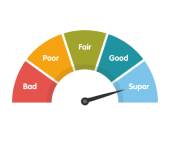
Before looking for solutions, it is crucial to understand how lenders evaluate your financial profile. When you apply for housing finance, your CIBIL score acts as your financial report card. Ranging from 300 to 900, it tells lenders how responsibly you have handled credit, such as personal loans and credit cards, in the past.
Generally, the minimum CIBIL score required for home loan in India is around 750 for most major public and private sector banks. A score above this threshold usually guarantees quick approvals, minimal documentation, and the most competitive interest rates. But what happens if your score is below this gold standard?
Let us specifically look at home loan eligibility for 600 CIBIL score. A score of 600 falls into the "fair" or "poor" category. If you walk into a top-tier commercial bank with this score, your application might be rejected outright. However, your overall home loan eligibility is not strictly tied to just a three-digit number. Lenders also look at your current income stability, your employment history, the company you work for, your age, and the amount of existing debt you carry. If you have a high income and zero current debt, a score of 600 becomes a hurdle rather than a dead end.
The Real Impact of a Subpar Credit Score
It is vital to be realistic about the challenges ahead. First and foremost, the impact of defaulted payments on home loan application processing can be severe. Lenders view past defaults, constant late payments, or "settled" accounts as high-risk indicators. They fear that a past default might translate into a future non-performing asset (NPA).
Consequently, to protect their bottom line, lenders adjust the cost of borrowing. The housing loan interest rates for low CIBIL score applicants are typically higher. Lenders add a "risk premium" to their standard lending rate.
Proven Strategies to Secure Housing Finance
Just because major banks have strict parameters does not mean you are out of options. Here are practical ways to secure low CIBIL score home loans in India without falling prey to unverified lenders.
1. Approach NBFCs and HFCs -
If top-tier banks decline your application, shift your focus to Non-Banking Financial Companies (NBFCs) and Housing Finance Companies (HFCs). Understanding the difference between an HFC vs bank home loan for poor credit is a game-changer. Banks operate under incredibly strict regulatory frameworks mandated by the Reserve Bank of India (RBI). In contrast, NBFCs and HFCs have more flexible internal policies regarding risk assessment.
NBFC home loans for low credit score borrowers are highly popular because these institutions look at the broader picture. They are willing to accommodate higher-risk profiles by customizing the loan terms. While they specialize in low credit home loans, remember that their interest rates and processing fees will be marginally higher than those of traditional banks.
2. Leverage a Joint Application -
One of the smartest workarounds for a poor credit history is applying with a co-applicant. If your spouse has a stellar credit history and a stable income, adding them as the primary applicant can drastically shift the scales in your favor.
The benefits of applying for joint home loan with spouse are manifold:
• Blended Risk: It blends your credit scores to present a lower risk to the lender.
• Higher Loan Amount: It combines your incomes, significantly boosting the total loan amount you are eligible for.
• Tax Benefits: Both co-applicants can claim individual tax deductions on the principal and interest repayments under Sections 80C and 24(b) of the Income Tax Act.
3. Bring in a Financial Guarantor -
If a joint loan is not feasible, consider asking a parent or a close blood relative with excellent credit to step in. The role of guarantor in securing housing finance is critical for borrowers struggling with poor credit. A guarantor does not co-own the property, but they are legally bound to repay the loan if you default. Their strong credit profile acts as a safety net for the lending institution, greatly mitigating the perceived risk of your low score.
4. Increase Your Initial Down Payment -
Typically, lenders finance 75% to 90% of a property’s total value, known as the Loan-to-Value (LTV) ratio. If your credit is poor, they might hesitate to fund a large portion of the property.
Increasing down payment amount for loan sanction is a highly effective negotiation tool. If you can manage to pay 30% to 40% upfront instead of the standard 10% to 20%, you drastically reduce the lender's financial exposure. Requesting a smaller loan amount shows immense financial discipline and commitment to the purchase.
The Special Case: No Credit History at All
Sometimes, a low score is not the problem—having no score is. If you have always dealt in cash, never taken a personal loan, and avoided credit cards, you are considered "New to Credit" (NTC). Your CIBIL score will likely show up as "NH" (No History) or "-1".
Securing a home loan for NTC customers in India requires a slightly different approach. Since there is no credit behavior to judge, lenders will rely heavily on your occupational stability. To get approved, you must provide airtight documentation: consistent salary slips, three years of Income Tax Returns (ITR), and bank statements showing healthy savings and no bounced cheques.
How to Repair and Rebuild Your Credit Profile -
While finding immediate workarounds is great for buying a house today, improving CIBIL score for home loan approval should be your ultimate, long-term goal. A better score enables you to eventually transfer your high-interest home loan balance to a premier bank at a much lower interest rate.
Here is a step-by-step approach to cleaning up your financial profile:
1. Spot and Rectify Bureau Errors -
Before you assume you have bad credit, pull a fresh credit report directly from CIBIL. Sometimes, a low score is a result of administrative mistakes. It could be due to clerical errors, mistaken identity (someone with a similar name defaulting), or an old, closed loan still reflecting as active and unpaid.
Knowing how to fix errors in CIBIL report before applying for your mortgage is essential. You can initiate a dispute directly on the official CIBIL website. The bureau has up to 30 days to verify the claim with the respective bank and correct the error. Resolving a false default can instantly shoot your score up by 30 to 50 points.
2. Implement Quick Fixes for Immediate Boosts -
If your report is accurate but you need to know how to increase credit score quickly for mortgage processing, start by aggressively paying down your revolving debt.
• Lower your CUR: Your Credit Utilization Ratio (how much credit card limit you use versus your total approved limit) should ideally stay below 30%. Paying off a maxed-out credit card yields one of the fastest score improvements.
• Clear small dues: Pay off any lingering outstanding dues. If you have an account marked as "Settled" (meaning you paid less than what was owed to close it), contact the bank, pay the remaining deficit, and request a "No Dues Certificate" (NDC) to change the status to "Closed".
3. Adopt Long-Term Credit Repair Strategies -
Sustainable credit repair strategies for Indian borrowers revolve around strict financial discipline.
• Automate Payments: Set up auto-debit (NACH mandates) for all your EMIs. A 100% on-time payment history is the single most heavily weighted factor in your credit score.
• Stop Applying for New Credit: Avoid applying for multiple personal loans or credit cards in a short window. Every time a lender checks your profile, it registers as a "hard inquiry," which temporarily knocks a few points off your score.
• Maintain Old Accounts: Do not close your oldest credit cards, even if you rarely use them. A lengthy credit history adds positive weight and stability to your profile.
Navigating the Application Process with Confidence -
Once you have optimized your profile, gathered a higher down payment, or found a co-applicant, approach the application process with transparency. Keep in mind that securing housing finance with a weak credit history is often a negotiation.
Be upfront with your chosen NBFC or HFC about past financial hiccups. A professional "Letter of Explanation" detailing exactly why a past default occurred—such as a sudden medical emergency, a temporary job loss during the pandemic, or a business downturn—can humanize your application. If you can show proof that you have since recovered financially and maintained steady income, credit managers are much more likely to view your application favorably.
Final Thoughts -
A low credit score is a speed bump, not a stop sign. Buying a house with a low CIBIL score in India requires a bit of extra patience, thorough market research, and strategic financial maneuvering. Do not let a three-digit number stand between you and home ownership. By exploring alternative lenders, leveraging the strength of joint applications or guarantors, putting down a larger initial payment, and actively working to repair your credit history, you can successfully secure the funding you need. Take proactive control of your financial health today, and soon enough, you will be walking through the front door of your dream home.
Disclaimer: This article is intended solely for informational purposes. Any interest rates, ratios, or values referenced are indicative in nature and do not constitute a guarantee. Interest rates and loan terms are subject to change and may vary based on individual eligibility, internal assessments, and the prevailing policies of Aavas Financiers Ltd.