 Give Missed Call for Home Loan +91 9706128128

 PMAY 2.0
 Pay EMI Online
 Download Loan App
Special Offers
 Give Missed Call for Home Loan +91 9706128128
 Special Offers

19-May-2026 | Green Home
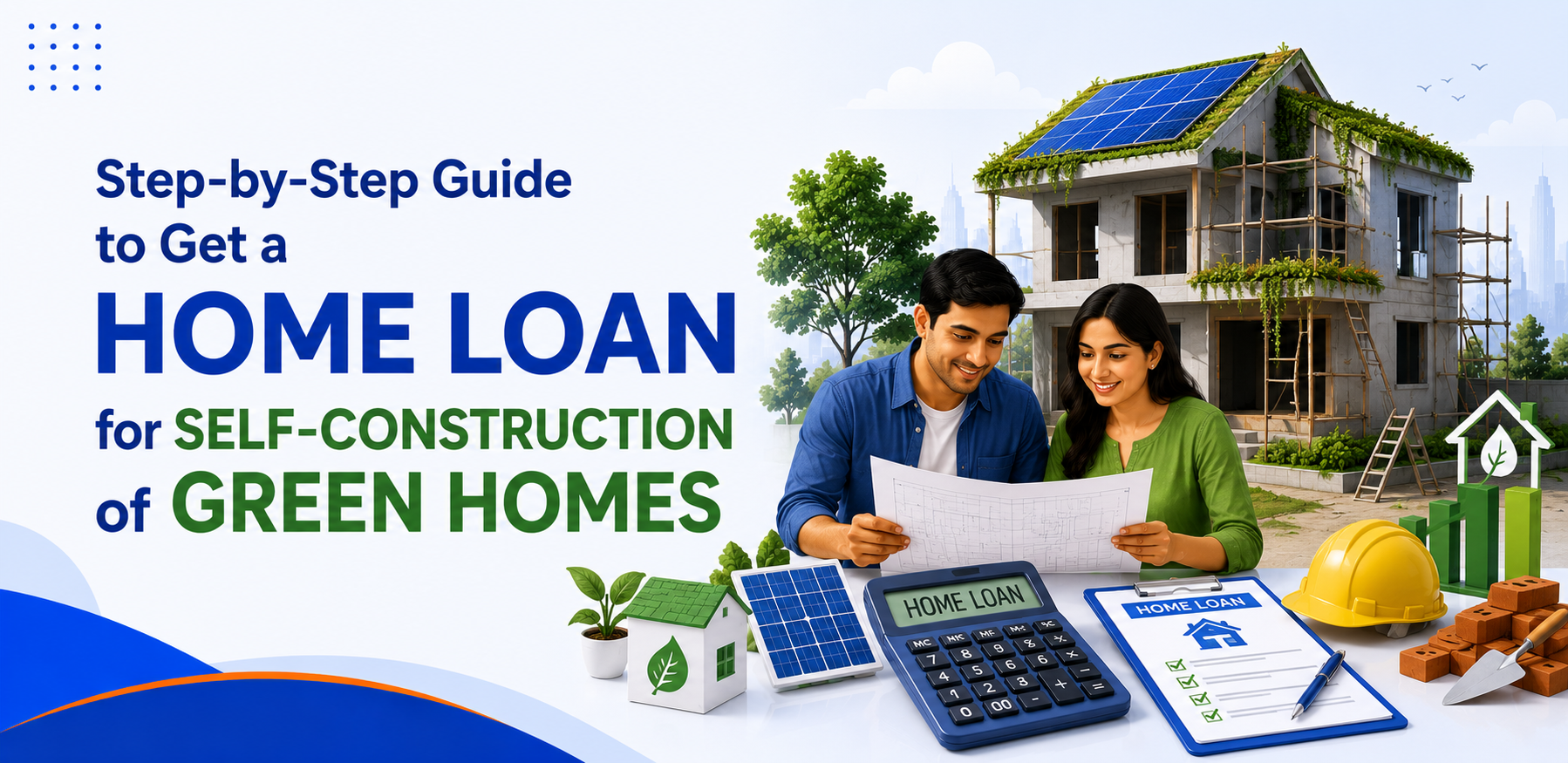
Today, homeowners are increasingly choosing green homes that are energy-efficient, environmentally responsible, and cost-effective in the long run.
A green home not only helps reduce electricity and water consumption but also creates a healthier and more comfortable living environment. According to the Aavas Green Homes Market research report, green homes can help homeowners save at least 20% on electricity and water bills through sustainable design and efficient technologies.
If you are planning to construct your own eco-friendly house, understanding the process of getting a home loan for self-construction is essential. Here is a complete step-by-step guide.
What is a Self-Construction Home Loan?
A self-construction home loan is a type of housing loan provided for individuals who own a plot and want to construct a house on it.
Unlike ready-to-move home loans:
• Funds are usually disbursed in stages
• Construction progress is monitored
• Technical and legal verification is conducted periodically.
These loans can also support construction of green and sustainable homes.
Why Choose a Green Home?
Green homes are designed to:
• Reduce energy usage
• Improve water efficiency
• Lower utility bills
• Improve indoor comfort by reducing the temperature inside the house
• Reduce environmental impact by lowering carbon emission.
Not only, that Green Home also help you to discounted interested rate of 0.50% as compared to normal loan financing. The IFC-Aavas Green Homes market research report highlights several sustainable measures that homeowners can adopt, including:
• Fly-ash bricks (mandatory)
• Reflective roof paint (mandatory)
• Exterior window shading (mandatory)
• Energy-efficient electrical equipment like bulbs and ceiling fans
• Rainwater harvesting
• Solar photovoltaic systems
• Low-flow taps and shower heads
Step-by-Step Process to Get a Home Loan for Green Home Construction -
Step 1: Check Your Eligibility -
Before applying, lenders generally assess:
• Monthly income
• Existing EMIs and liabilities
• Credit score
• Employment stability
• Repayment capacity.
Both salaried and self-employed individuals can apply for self-construction loans.
Step 2: Ensure Plot Ownership Documents are Ready -
You should have:
• Plot ownership papers
• Sale deed
• Mutation documents
• Approved map/layout
• Property tax receipts.
The lender will verify the legal ownership and marketability of the land.
Step 3: Prepare a Construction Plan -
A proper construction estimate and architectural plan are usually required.
The plan may include:
• Floor layout
• Structural details
• Estimated construction cost
• Green home building features as mentioned above.
Adding eco-friendly construction elements can improve long-term savings and sustainability.
Important Green Features to Include in Your Home -
Reflective White Paint -
The Green Home Guide recommends reflective white coatings on the roof that help keep homes cooler and reduce electricity usage during summers.
Benefits include:
• Lower cooling costs
• Reduced heat absorption
• Improved indoor comfort.
Exterior Window Shading -
Proper shading reduces direct sunlight and heat entering the house. The green homes user manual guide suggests overhangs and window shading solutions to improve thermal comfort.
Energy-Efficient Electrical Equipment -
Using 5-star rated ceiling fans and bulbs with lower power consumption can significantly reduce electricity bills.
Rainwater Harvesting -
Rainwater harvesting systems can reduce water shortages and lower water bills. The green home guide recommends collection systems with adequate storage and filtration.
Solar Power Systems -
Installing solar photovoltaic panels helps generate electricity and reduce long-term utility expenses. The guide notes that solar systems can work effectively throughout the year when properly installed.
Step 5: Submit Your Loan Application -
The loan application generally requires:
• KYC documents
• Income proof
• Bank statements
• Construction estimate
• Property documents
• Approved building plan.
Both online and branch-based applications are commonly available.
Step 6: Technical and Legal Verification -
The Aavas Financiers Team will conduct:
• Legal verification of land
• Technical evaluation of construction plan
• Estimated project cost review
• Construction progress assessment.
This stage is crucial for approval.
Step 7: Loan Sanction and Stage-Wise Disbursement -
Unlike ready home loans, self-construction loans are usually disbursed in phases based on construction progress.
Typical stages may include:
• Foundation work
• Roof slab completion
• Brickwork
• Finishing stage
Our team may inspect the site before each disbursement.
You can also read our blog - Construction Loans for Rural & Semi-Urban India | Aavas
Tips to Improve Approval Chances -
Maintain a Good Credit Score -
A credit score above 750 generally improves approval chances.
Keep Construction Budget Realistic -
Avoid overestimating construction costs beyond repayment capability.
Use Approved Contractors and Plans -
Legally approved plans improve verification and smoother processing.
Include Energy-Efficient Features -
Green measures can improve long-term affordability through lower utility expenses.
Final Thoughts -
A self-construction home loan gives you the flexibility to build a house exactly the way you want. By integrating green building practices, you can create a home that is efficient, sustainable, and financially beneficial in the long run.
A well-planned green home can provide comfort, savings, and long-term value for years to come.
Disclaimer: This article is intended solely for informational
purposes. Any interest rates, ratios, or values referenced are
indicative in nature and do not constitute a guarantee. Interest rates
and loan terms are subject to change and may vary based on individual
eligibility, internal assessments, and the prevailing policies of Aavas
Financiers Ltd.