 Give Missed Call for Home Loan +91 9706128128


 PMAY 2.0
 Pay EMI Online
 Download Loan App
Special Offers


 Give Missed Call for Home Loan +91 9706128128
Special Offers

27-Nov-2026 | Credit Score

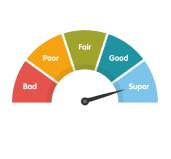
A "no credit score" is not the same as being to have a bad credit score. If you have never taken a loan or held a credit card, the bureaus have simply nothing to score about your financial actions. However, a lender that looks beyond the bureau report can still assess you on various aspects that actually show you can repay.
This reflects the situation of many first-time borrowers, small shop owners, daily-wage earners, and young salaried applicants. This blog explains what "no score" really means, which alternatives a lender may consider, including a guarantor and utility bill history and what you can do to make your application stronger.
No Credit Score vs. Low Credit Score -
Credit bureaus such as TransUnion CIBIL build your score from your repayment record. With no loans or cards, there is no record to score. Your report may show NH or NA (no history / not applicable) instead of a number. A low score, by contrast, means a history exists and it contains late payments, defaults or heavy credit use.
| No score (NH / NA) | Low score (e.g. below 650) | |
| What it means | No credit history at all | A history exists, with problems |
| Typical borrower | First-time borrower, informal earner, young applicant | Someone with past late payments or defaults |
| How a lender reads it | Unknown risk, assessed on income and cash flow | Known risk |
| Does waiting help? | Time alone adds no history | Often can be repair over 6–12 months |
Options When You Have No Credit Score -
1. Income-based evaluation -
Many HFCs serving semi-urban and rural borrowers assess income directly. Instead of relying on a score, the officer studies your bank statements, business activity and household cash flow to estimate what EMI you can comfortably afford. This is the most important route for self-employed and informal-sector applicants, who often earn well but have little paperwork or credit history.
2. Utility bill and rent payment history -
Regular, on-time payment of electricity, water, gas, mobile and broadband bills or rent shows discipline. Here it is important to be realistic about what this can and cannot do:
• It does not create a CIBIL score. Utility and rent payments are generally not reported to credit bureaus, so they will not appear on your credit report.
• It can still support your application. A lender may treat a clean, long bill history as supporting evidence of stability and address proof, alongside your income documents. How much weight it carries is the lender's decision.
• Keep proof organised. Gather 6–12 months of paid bills, rent receipts or a rent agreement, and make sure the name and address match your KYC.
3. A co-applicant -
A co-applicant often a spouse, parent or adult child applies with you and shares full legal responsibility for the loan. Their income is added to yours, and if they have a good credit record, it strengthens the profile. A co-applicant is typically a co-owner of the property or closely related to the borrower; the exact requirement depends on the lender.
4. A guarantor -
A guarantor is a person who promises to repay the loan if you cannot. Some lenders ask for one when the applicant's profile is thin. Before you ask someone to stand guarantor or agree to be one understand how it differs from a co-applicant:
| Co-applicant | Guarantor | |
| Role | Joins the loan as a borrower | Backs the loan; steps in only if the borrower defaults |
| Income counted for eligibility | Usually yes | Depends on lender policy |
| Ownership of property | Often a co-owner | Not usually an owner |
| Liability | Equally liable for full repayment | Liable if the borrower defaults, it a serious legal commitment |
| Effect on their credit | Repayment behaviour appears on their report | A default can affect their credit record and borrowing ability |
5. A larger down payment -
The more of your own money you put in, the less the lender has to lend against the property. A bigger down payment lowers the lender's exposure and can offset the lack of a credit score.
6. A realistic loan amount -
Asking for the maximum you might qualify for invites questions. A modest loan relative to your income, with a comfortable EMI, makes your case easier to approve.
Start Building Credit Even Before You Apply -
If you are not in a hurry, a few months of visible credit behaviour can help. Options include:
• A small starter product, for example a credit card secured against a fixed deposit which is used lightly and paid in full every month.
• A small consumer loan or an item on EMI, repaid on time.
• Avoiding multiple applications at once; each formal application can add an enquiry to your report.
Typically, a few months of clean repayment are needed before a score appears. If your home purchase cannot wait, apply with a lender that assesses income directly instead.
How to Apply Online in 4 Steps -
1. Check your credit report - Confirm whether you show as NH/NA or have an unexpected entry. If an account you do not recognise appears, dispute it with the bureau.
2. Visit www.aavas.in - Choose the home loan option and fill in the online enquiry form with your name, mobile number, city, loan amount and income type.
3. Tell the officer your situation - Say plainly that you have no credit history. A representative will explain what terms are realistically available and which documents help.
4. Verification, sanction and disbursement - Your income and the property are assessed. On approval you receive a sanction letter, and funds are disbursed after documentation is complete.
Documents to Keep Ready -
Identity & Address -
• Aadhaar, PAN, Voter ID or Passport
• Recent utility bill or rent agreement (also supports your payment-discipline case).
Income — Salaried -
• Last 3 months' salary slips and 6 months' bank statements
• Form 16 or latest ITR.
Income — Self-Employed / Informal -
• 6–12 months' bank statements showing regular inflows
• Business proof, shop licence, Udyam registration or trade documents where available.
Supporting documents -
• 6–12 months of paid utility bills, rent receipts or mobile bills
• Co-applicant or guarantor KYC and income documents, if applicable
• Evidence of savings or down payment funds
Frequently Asked Questions (FAQs) -
Q. Can I get a home loan if I have no credit score?
Yes, in many cases. A blank credit record means there is no history to judge, not that your history is bad. HFCs that assess income and cash flow directly can consider such applications, subject to their policy, your documents and the property.
Q. What does NH or NA mean on my CIBIL report?
NH means "no history" and NA means "not applicable". Both indicate that the bureau has no credit data to calculate a score for you.
Q. Do utility bills count towards my credit score?
Generally no. Electricity, water and similar bills are not usually reported to credit bureaus. However, a clean payment record can serve as supporting evidence of stability when a lender assesses your profile.
Q. Do I need a guarantor for a home loan with no credit history?
Not always. It depends on your income profile, the loan amount and the lender's policy. Some lenders may ask for a guarantor or a co-applicant when the profile is thin.
Q. What is the difference between a guarantor and a co-applicant?
A co-applicant is a joint borrower who shares full repayment responsibility and whose income is usually counted. A guarantor promises to repay only if the borrower defaults. Both carry real legal responsibility.
Q. How long does it take to build a credit score from scratch?
Typically a few months of regular repayment on a card or small loan are needed before a score is generated. Timelines vary by bureau and reporting by lenders.
Q. Will a bigger down payment help?
It often does. A larger down payment reduces the amount the lender must finance and signals financial discipline.
Q. Is it better to build a score first or apply now?
If your income is stable and documented, applying with a lender that assesses income directly can make sense. If your purchase is not urgent, a few months of building credit history can widen your options and may improve terms.
Final Thoughts -
Having no credit score is a gap, not a verdict. It narrows the lenders who will say yes quickly, but it does not close the door especially if your income is steady and your documents are in order.
Gather your bank statements and bills, decide whether a co-applicant, guarantor or larger down payment makes sense, and speak to a lender that looks beyond the number. If you are ready to explore what is possible, start your application with Aavas Financiers.
Disclaimer: This article is intended solely for informational purposes. Any interest rates, ratios, or values referenced are indicative in nature and do not constitute a guarantee. Interest rates and loan terms are subject to change and may vary based on individual eligibility, internal assessments, and the prevailing policies of Aavas Financiers Ltd.