 Give Missed Call for Home Loan +91 9706128128

 PMAY 2.0
 Pay EMI Online
 Download Loan App
Special Offers


 Give Missed Call for Home Loan +91 9706128128
 Special Offers

29-Apr-2026 | Home Loan
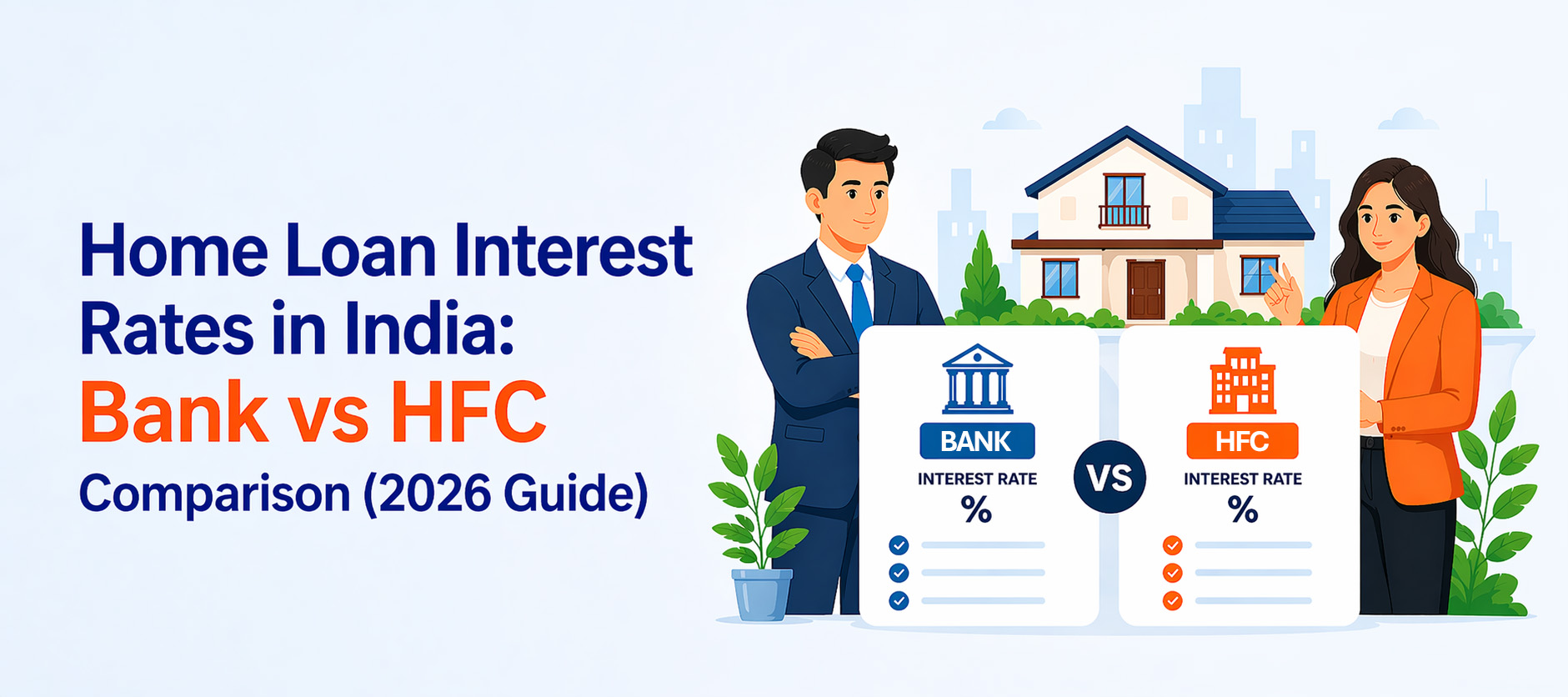
Buying a home is one of the biggest financial decisions in life—and choosing the right lender can make a huge difference in how much you pay over time. In India, borrowers typically choose between banks and Non-Banking Financial Companies (NBFCs) like Aavas Financiers Ltd.
But how do their interest rates really compare in 2026? Let’s break it down.
Understanding Home Loan Interest Rates in India
Home loan interest rates in India are influenced by:
• RBI’s repo rate
• Borrower’s credit score (CIBIL)
• Income stability
• Loan tenure and amount
As of 2026:
• Banks: ~8.35% to 9.25%
• NBFCs/HFCs: ~8.75% to 11.5% (depending on profile )
While banks often advertise lower rates, NBFCs offer greater flexibility and approval chances, especially for self-employed or semi-formal income borrowers.
Bank vs NBFC: Key Differences in Interest Rates
|
Factor |
Banks |
NBFCs |
|
Benchmark |
Repo Linked |
Internal Rate |
|
Transparency |
High |
Moderate |
|
Flexibility |
Low |
High |
NBFCs like Aavas often tailor pricing based on borrower profiles rather than strict benchmarks.
2. Credit Score Impact
• Banks: Prefer 750+ CIBIL
• NBFCs: Can work with 600–750 range
This flexibility often outweighs slightly higher rates.
3. Processing Speed
• Banks: 7–15 days
• NBFCs: 3–7 days
For urgent home buying, NBFCs provide faster approvals.
How to Choose Between Bank and NBFC Rates
Step-by-Step Decision Guide
Step 1: Check your credit score
• Above 750 → Bank may offer lower rate
• Below 750 → NBFC may approve faster
Step 2: Evaluate income type
• Salaried → Both options
• Self-employed → NBFC better
Step 3: Compare total cost (not just rate)
Include:
• Processing fee
• Prepayment charges
• Flexibility
Industry Insight -
According to RBI trends:
• Housing loans form ~14% of total bank credit in India
• NBFCs are driving growth in tier 2, tier 3 and semi-urban markets.
This is where companies like Aavas play a crucial role.
Pros & Cons Summary -
Banks -
✔ Lower rates
✔ High transparency
❌ Strict eligibility
NBFCs -
✔ Flexible approvals
✔ Faster processing
✔ Better for informal income
FAQs
Q1: Who should choose an NBFC like Aavas Financiers?
Self-employed individuals, low or informal income earners, or those with moderate CIBIL scores.
Q2: Can I switch from bank to NBFC later?
Yes, via balance transfer.
Disclaimer: This article is intended solely for informational purposes. Any interest rates, ratios, or values referenced are indicative in nature and do not constitute a guarantee. Interest rates and loan terms are subject to change and may vary based on individual eligibility, internal assessments, and the prevailing policies of Aavas Financiers Ltd.