 Give Missed Call for Home Loan +91 9706128128

 PMAY 2.0
 Pay EMI Online
 Download Loan App
Special Offers

 Give Missed Call for Home Loan +91 9706128128
 Special Offers

31-Dec-2025 | Affordable Housing
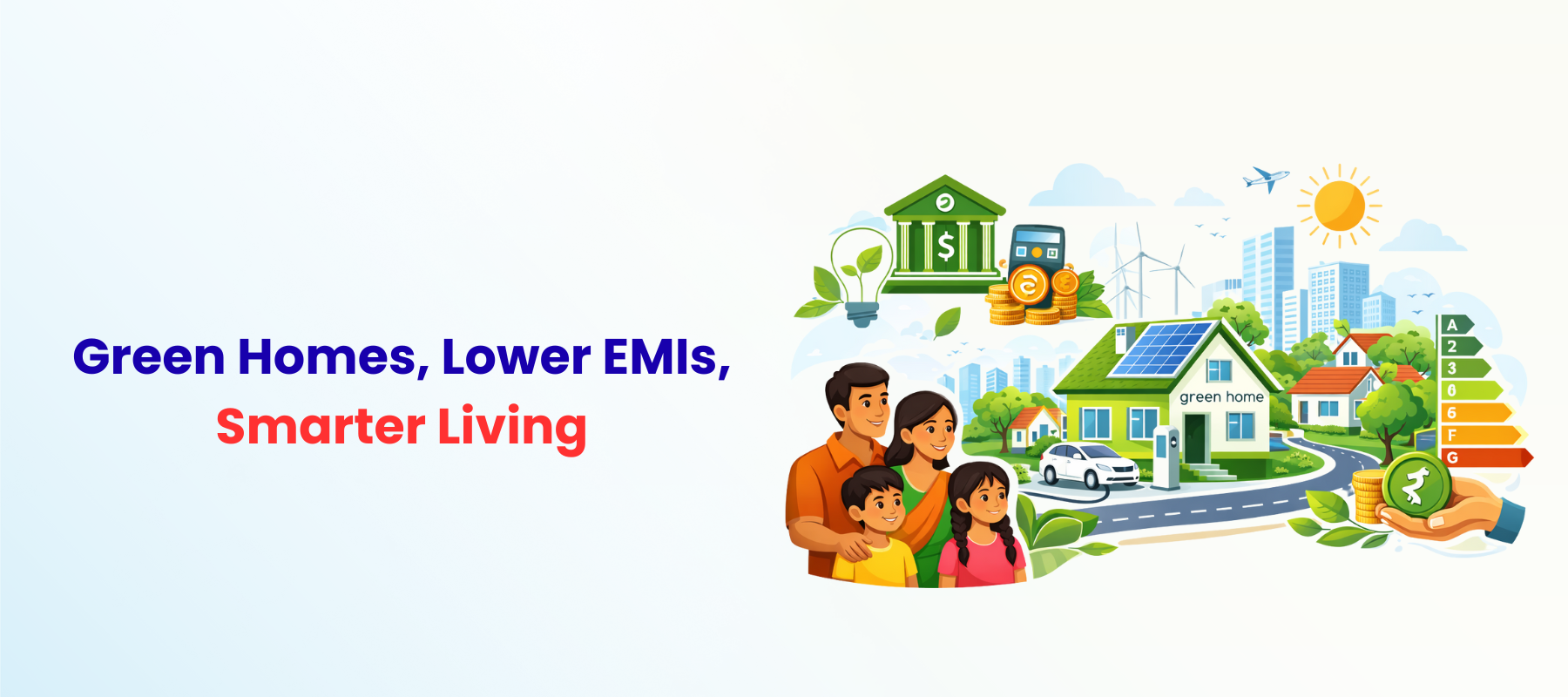
For generations, the Indian dream has been centred around "Makaan"—owning a home that provides security for our children and a foundation for our future. But as our cities grow denser and our summers get harsher, the definition of a "good home" is evolving. It is no longer just about the square footage or the marble flooring; it is about how that home breathes, how it handles the sun, and how much it costs to run every single month.
Welcome to the era of Green Homes in India. If you think green buildings are only for high-end luxury towers or corporate offices, it’s time to look closer. Sustainability is becoming the new standard for affordable, sensible living.
In simple terms, a green home is designed to work with nature rather than against it. In the Indian context, this means a house that stays naturally cool during a heatwave in Rajasthan, harvests rain during the Mumbai monsoons, and uses sunlight to brighten rooms without needing a bulb at noon.
It involves using eco-friendly materials like fly-ash bricks, installing low-flow water fixtures, and ensuring the architecture allows for "cross-ventilation"—the age-old Indian wisdom of letting the breeze flow from one window to another.
We often hear the word "sustainability" in news reports about climate change, but for a homeowner, sustainability is deeply personal. It is about resilience.
India is one of the most climate-vulnerable countries in the world. As temperatures rise, our reliance on air conditioning and heavy water consumption is becoming a financial burden. By choosing a green home, you are essentially "future-proofing" your life. You are ensuring that your family is protected from rising utility costs and that your living environment remains healthy and comfortable for decades to come.
This is perhaps the biggest misconception: that green homes are expensive. While the initial construction might cost 2-5% more due to specialized materials, the "Return on Investment" is incredible.
· Electricity Bills: High-performance windows and reflective roof paints can reduce indoor temperatures by 3-5 degrees, slashing your AC or cooler bills by nearly 20%.
· Water Bills: With rainwater harvesting and dual-flush systems, a household can reduce its water consumption by 20%. In a country where water scarcity is a growing reality, this isn't just a saving; it's a necessity.
Traditional paints and cheap building materials often release "Volatile Organic Compounds" (VOCs) that can cause respiratory issues. Green homes prioritize non-toxic materials and better air filtration. When your home has better natural light and fresh air circulation, the stress levels of the inhabitants drop, and the health of the elderly and children improves.
As awareness grows, the market is shifting. A "certified" green home by Sintali - The UK based firm that verifies Edge Certification and IFC. Much like a fuel-efficient car has a better resale value than a gas-guzzler, an energy-efficient home will always find a buyer faster in the future.
The heart of a green home is its energy efficiency. In India, we have an abundance of solar energy. By integrating solar panels or even simple solar water heaters, a home stops being just a consumer of energy and becomes a producer. This shift from "resource-heavy" to "resource-light" living is what will define the Indian middle class in the next decade.
Small changes, like using Fans, LED lighting as a standard or choosing BEE 5 star-rated electric appliances, complement the green structure of the house, leading to a home that practically pays for itself over time.
Building or buying a green home requires a partner who understands that these aren't just "extra costs"—they are "smart investments."
Aavas Financiers has emerged as a leading name in the Indian housing finance sector, not just because of its scale, but because of its vision. Aavas has always been at the forefront of the "Affordable Housing" movement, but today, they are merging affordability with sustainability.
· Specialized Support: Aavas understands the nuances of green construction. Whether you are a self-employed individual in a semi-urban area or a salaried professional in a city, Aavas provides the financial backing to help you incorporate sustainable features into your home.
· Incentivizing Sustainability: By partnering with international organizations like the International Finance Corporation (IFC), Aavas has been instrumental in promoting "Green Housing" projects across India. They actively encourage developers and individual home-builders to adopt eco-friendly practices.
· Empowering the Grassroots: While many banks focus on high-rise green buildings in metros, Aavas brings this technology to the heart of India. They believe that a family in a small town deserves a cool, energy-efficient, and healthy home just as much as someone in a skyscraper.
Choosing a home is the most significant financial decision you will ever make. You can choose a home that consumes, or you can choose a home that sustains.
Green homes in India are no longer a fad; they are a response to our environment and our economy. They offer a life of lower bills, better health, and the peace of mind that you are leaving a smaller footprint on the planet for your children.
As a leading housing finance brand, Aavas Financiers is ready to walk this green path with you. From providing the right loan to offering digital tools like their EMI Calculator and Loan App, they make the process of building a sustainable future simple and accessible.
The future of India is green. Is your home ready for it?