 Give Missed Call for Home Loan +91 9706128128

 PMAY 2.0
 Pay EMI Online
 Download Loan App
Special Offers

 Give Missed Call for Home Loan +91 9706128128
 Special Offers

18-May-2026 | Home Loan
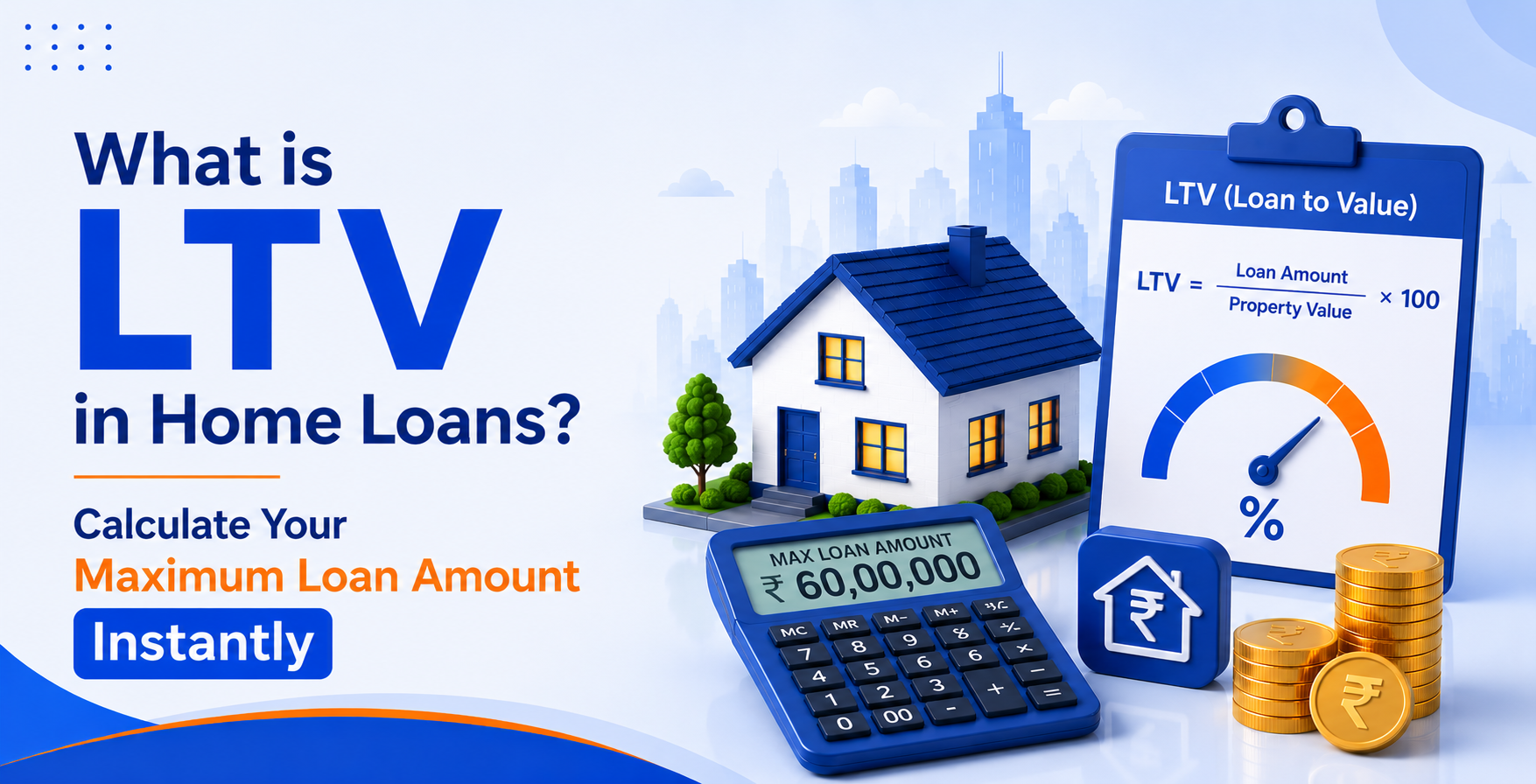
When applying for a home loan, most borrowers focus on interest rates and EMI affordability. However, one of the most important factors that lenders evaluate before approving a home loan is the Loan-to-Value (LTV) Ratio.
LTV directly impacts:
• Eligible loan amount
• Required down payment
• Loan approval chances.
Understanding LTV can help you financially prepare for buying your dream home and improve your home loan eligibility.
What is LTV in Home Loans?
LTV or Loan-to-Value Ratio is the percentage of the property value that a Bank/HFC/NBFCs are willing to finance through a home loan.
In simple words:
LTV indicates how much loan you can get against the property value you want to purchase.
The remaining amount has to be paid by the borrower as a down payment from self-funding.
LTV Formula -
The Loan-to-Value ratio is calculated using the following formula:
LTV=Property Value/Loan Amount×100
Example of LTV Calculation
Suppose:
• Property Value = ₹50 Lakhs
• Home Loan Amount = ₹40 Lakhs
Then:
LTV=40,00,000/50,00,000/×100=80%
This means the lender is financing 80% of the property value, while the borrower must contribute the remaining 20% as down payment.
Why is LTV Important in Home Loans?
1. Determines Your Loan Eligibility -
• LTV decides how much funding a Bank/HFCs/NBFCs can provide against the property.
• Higher property value + acceptable LTV = higher loan eligibility.
2. Impacts Down Payment Requirement -
Lower LTV means:
• Higher down payment
• Lower loan burden.
Higher LTV means:
• Lower upfront contribution
• Easier home purchase affordability.
For example:
• 90% LTV → Borrower pays 10%
• 80% LTV → Borrower pays 20%.
3. Reflects Lending Risk -
Banks/HFCs/NBFCs use LTV to measure risk.
A high LTV indicates:
• Higher financing exposure for lender
• Lower borrower contribution
• Higher repayment risk.
4. Influences Loan Approval -
Borrowers with:
• Strong income
• Good credit score
• Stable employment
• Lower LTV.
often have higher loan approvals.
Benefits of Maintaining a Healthy LTV Ratio
Lower Financial Stress
A balanced LTV ensures manageable EMIs and better financial planning.
Better Loan Approval Chances
Reasonable borrower contribution improves lender confidence.
Reduced Interest Burden
Lower loan amount means:
• Lower EMI
• Lower overall interest payable.
Improved Financial Discipline
Higher own contribution often reflects stronger financial planning and repayment capability.
Factors Affecting LTV Ratio
Several factors influence the LTV offered by lenders:
Property Value
The lender considers:
• Market value
• Agreement value
• Technical valuation
before calculating eligible LTV.
Credit Score
Borrowers with higher credit scores may receive better offers and faster approvals.
Income and FOIR
Your income and repayment capacity also affect approval.
Property Type
LTV may vary depending on:
• Ready-to-move property
• Under-construction property
• Self-construction
• Plot plus construction.
Location and Risk Assessment -
Properties in approved and marketable locations generally receive smoother approvals.
LTV in Affordable Housing Loans -
In affordable housing finance, LTV plays an important role in enabling first-time home buyers to purchase homes with lower upfront contribution.
As per indicative housing finance policy norms:
• Funding may vary depending on property category
• Technical valuation and legal verification remain important
• LTV is linked with property market value and risk assessment.
How to Improve Your Home Loan Approval with Better LTV
Increase Down Payment
Paying a larger upfront amount increases the change of quick loan approvals with reduces lender’s risk.
Improve Credit Score
Maintain:
• Timely EMI payments
• Low credit utilization
• Clean repayment history
Choose Pocket-Friendly Property
Selecting a property within your repayment capacity improves eligibility.
Maintain Stable Income
Stable employment or consistent business income supports stronger loan assessment.
Common Mistakes Borrowers Should Avoid -
• Depending entirely on maximum loan eligibility.
• Ignoring additional costs like registration and stamp duty.
• Taking very high EMIs beyond repayment comfort.
• Applying without checking credit score.
• Underestimating own contribution requirements.
Apply for the Right Home Loan with Confidence -
Understanding LTV helps you:
• Plan your down payment.
• Estimate eligible loan amount.
• Improve approval chances.
• Make financially smarter decisions.
Looking for a Home Loan?
Whether you are:
• Buying your first home.
• Constructing a house.
• Renovating property.
• Transferring an existing home loan.
Start your home ownership journey with the right financial planning and responsible borrowing.
Frequently Asked Questions (FAQs)
Q1. What is a good LTV ratio for home loans?
An LTV between 75% to 80% is generally considered healthy, though eligibility varies by lender and borrower profile.
Q2. Can I get 90% home loan financing?
Yes, some lenders may offer up to 90% LTV for eligible borrowers, especially for lower-value residential properties. It majorly depends on internal policies of Bank/HFCs/NBFCs.
Q3. Does higher LTV increase EMI?
Yes. A higher LTV means a larger loan amount, which can increase EMI and total interest payable.
Q4. Is LTV the same as down payment?
No. LTV is the financed portion, while down payment is the amount required to paid by the borrower.
Q5. Does RBI regulate LTV ratios?
Yes. RBI provides broad regulatory guidelines regarding maximum permissible LTV limits for housing loans in India.
Disclaimer: This article is intended solely for informational
purposes. Any interest rates, ratios, or values referenced are
indicative in nature and do not constitute a guarantee. Interest rates
and loan terms are subject to change and may vary based on individual
eligibility, internal assessments, and the prevailing policies of Aavas
Financiers Ltd.