 Give Missed Call for Home Loan +91 9706128128

 PMAY 2.0
 Pay EMI Online
 Download Loan App
Special Offers


 Give Missed Call for Home Loan +91 9706128128
 Special Offers

15-May-2026 | Home Loan
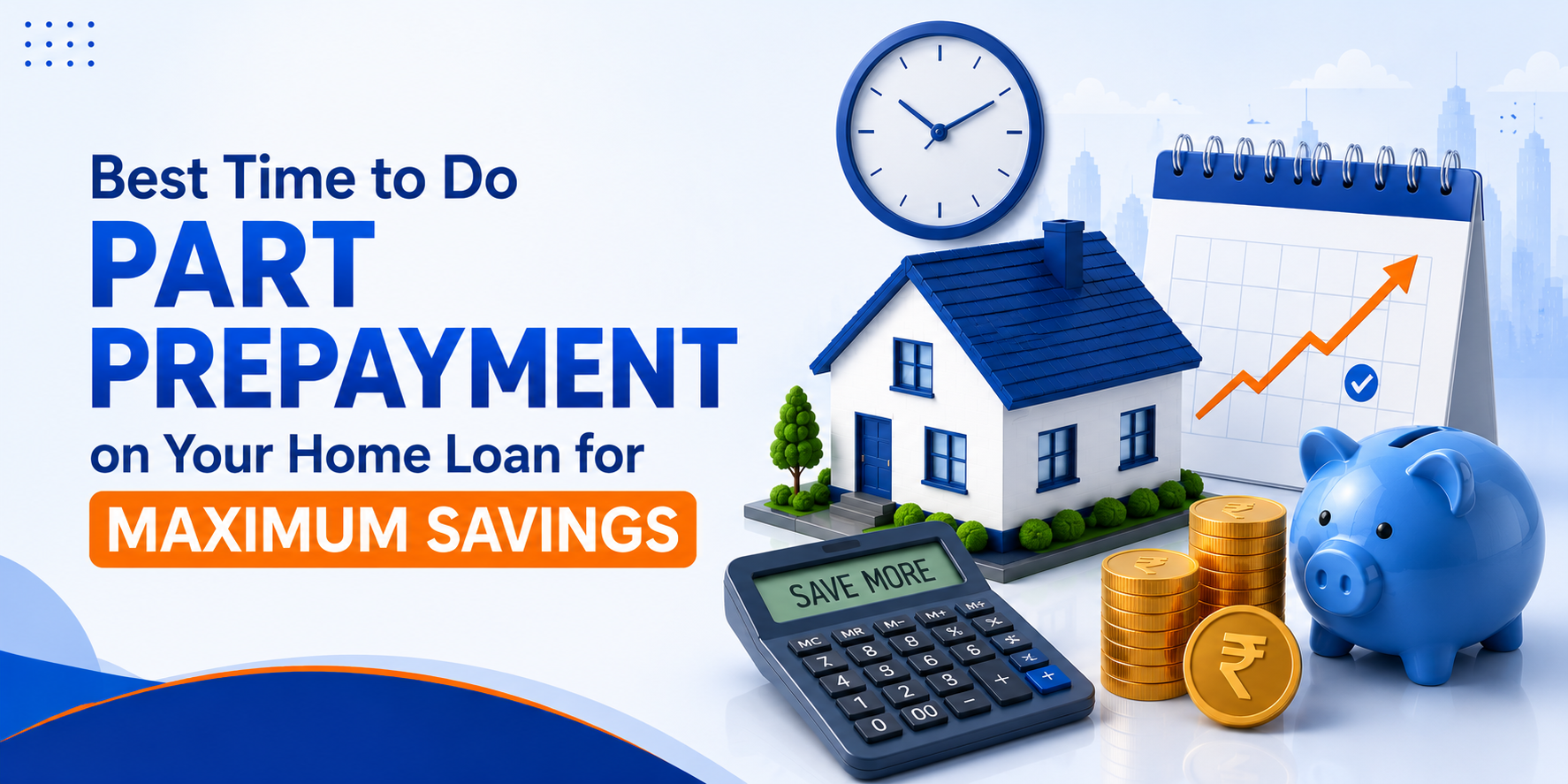
A home loan is one of the biggest financial commitments for most families in India. Since home loans usually run for 15 to 30 years, there is a significant amount paid as interest over the loan tenure.
One of the smartest ways to reduce this liability is to repay through part prepayment.
Part prepayment helps borrowers:
• Reduce total interest payout
• Lower loan tenure
• Improve financial flexibility
• Become debt-free faster
However, the timing of prepayment plays a major role in maximizing savings. Understanding when and how to make a part prepayment can help you save lakhs over the course of your home loan.
What is Part Prepayment in a Home Loan?
Part prepayment means paying an additional lump sum amount towards your home loan principal apart from your regular EMI.
This extra payment directly reduces the outstanding principal amount, which in turn reduces the future interest burden.
For example:
• Regular EMI continues monthly
• Additional amount is paid occasionally
• Loan balance reduces faster
Most lenders allow part prepayment on floating-rate home loans, though terms and conditions may vary.
Why Part Prepayment Matters -
In a home loan, especially during the initial years, a large portion of the EMI goes towards interest rather than principal repayment.
That means:
• Early prepayment creates higher savings
• Later-stage prepayment offers comparatively lower impact.
The sooner you reduce your principal, the lower your future interest liability becomes.
Best Time to Make Part Prepayment -
1. During the Initial Years of the Loan
The best time to make part prepayment is usually within the first 5–7 years of the home loan.
Why?
Because during the early years:
• Interest component is highest
• Outstanding principal is larger
• Prepayment creates maximum impact.
Even small prepayments during this phase can significantly reduce total interest payable.
2. After Receiving Bonus or Incentives
Many salaried individuals receive:
• Annual bonuses
• Performance incentives
• ESOP payouts
• Salary arrears.
Using a portion of these funds for part prepayment can help reduce your loan amount without disturbing monthly cash flow.
3. After Clearing High-Interest Loans
Before prepaying your home loan, ensure expensive debts such as:
• Credit cards
• Personal loans
• Consumer loans
are cleared first.
Since home loans generally carry lower interest rates, high-cost debt repayment should often take priority.
4. During Interest Rate Hikes
When lending rates rise, EMIs or loan tenure may increase.
Part prepayment during rising interest cycles helps:
• Reduce outstanding balance
• Control EMI burden
• Manage total repayment cost
How Much Should You Prepay?
There is no fixed rule, but experts often suggest:
• 5% to 10% of outstanding loan annually
• Using surplus savings strategically
• Avoiding depletion of emergency funds.
Prepayment should not affect:
• Emergency savings
• Insurance planning
• Essential investments
• Daily financial stability.
Benefits of Part Prepayment -
1. Reduced Interest Cost
This is the biggest advantage.
A lower principal means lower future interest calculations.
2. Shorter Loan Tenure
Regular prepayments can significantly reduce your repayment period.
A 20-year loan may reduce by several years depending on the prepayment amount.
3. Improved Financial Freedom -
Reducing debt faster helps:
• Reduce financial stress
• Increase long-term savings potential
• Improve future borrowing capacity.
Should You Reduce EMI or Tenure After Prepayment?
Most lenders provide two options after part prepayment:
Option 1: Reduce EMI -
Suitable when:
• You want better monthly cash flow
• Household expenses are increasing
• Financial flexibility is important.
Option 2: Reduce Loan Tenure -
Suitable when:
• Your income is stable
• Goal is maximum interest savings
• You want faster loan closure.
You can choose the most convenient or comfortable option that suits you best.
Mistakes to Avoid While Prepaying-
1. Using Emergency Savings -
Never exhaust your emergency fund completely for loan prepayment.
Maintain sufficient liquidity for: -
• Medical emergencies
• Job loss
• Family expenses
• Business Exigencies (For Self- Employed)
2. Ignoring Investment Opportunities -
Sometimes investments may generate returns higher than home loan interest rates.
Balance between:
• Loan repayment
• Retirement and other financial planning is important.
3. Not Checking Prepayment Terms -
Home loans usually comes with no pre-payment charges but depending upon the lender’s policies, it is advisable to check and confirm:
• Prepayment charges
• Minimum prepayment amount
• Processing conditions
• Frequency limitations
Who Should Consider Home Loan Part Prepayment?
Part prepayment is ideal for:
• Salaried employees receiving bonuses
• Self-employed individuals with seasonal surplus income
• Borrowers nearing retirement
• Families aiming for debt-free living
• Individuals with rising income levels.
Smart Financial Strategy for Home Loan Borrowers -
A disciplined prepayment strategy can help you:
• Save substantial interest costs
• Become debt-free earlier
• Improve financial security
• Build long-term wealth.
Even small periodic prepayments can create a major impact over time.
Frequently Asked Questions (FAQs) -
Q1. Is part prepayment allowed in all home loans?
Most floating-rate home loans allow part prepayment.
Q2. What is the ideal time for part prepayment?
The initial years of the loan tenure generally provide maximum savings benefit.
Q3. Is there any penalty on part prepayment?
There are zero prepayment charges on home loans.
Q4. Should I reduce EMI or tenure after prepayment?
Reducing tenure usually offers greater interest savings, while EMI reduction improves monthly cash flow.
Q5. How often can I make part prepayments?
As per NHB guidelines, you can make as many prepayments as per your convivence with zero prepayment charges.
Disclaimer: This article is intended solely for informational
purposes. Any interest rates, ratios, or values referenced are
indicative in nature and do not constitute a guarantee. Interest rates
and loan terms are subject to change and may vary based on individual
eligibility, internal assessments, and the prevailing policies of Aavas
Financiers Ltd.