 Give Missed Call for Home Loan +91 9706128128

 PMAY 2.0
 Pay EMI Online
 Download Loan App
Special Offers


 Give Missed Call for Home Loan +91 9706128128
 Special Offers

04-Apr-2025 | Home Loan
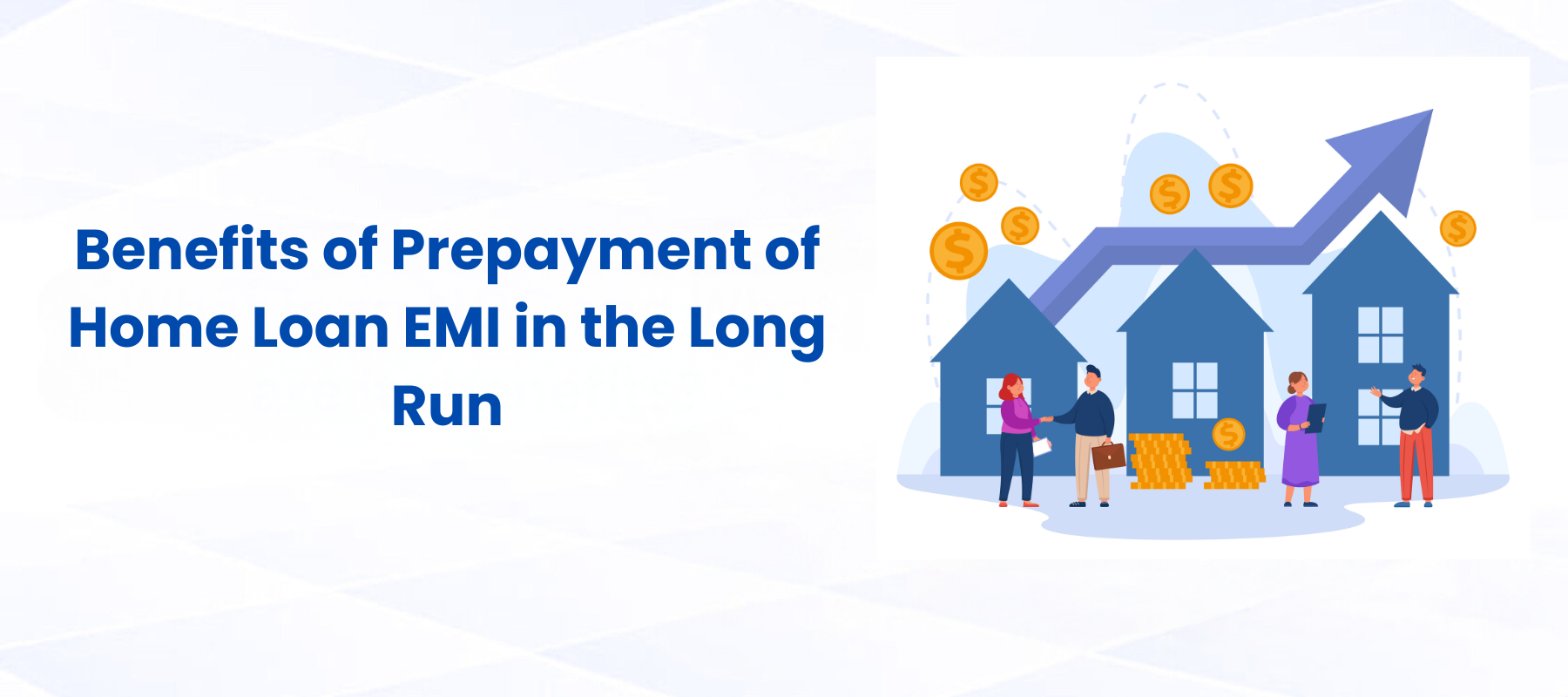
A home loan is one of the most significant financial commitments an individual makes in their lifetime. While it provides the necessary financial support to buy a dream home, it also comes with the responsibility of repaying the loan over an extended period, often spanning 15 to 30 years. One effective strategy to reduce the overall burden of a home loan is prepayment. Prepaying your home loan EMI can offer multiple benefits in the long run, helping you save on interest costs, reduce financial stress, and achieve financial freedom earlier than planned.
In this article, we will explore the various benefits of prepaying your home loan, how it impacts your financial health, and some key considerations before making prepayments.
Understanding Home Loan Prepayment
Home loan prepayment refers to making an extra payment toward the principal loan amount before the scheduled EMI tenure. This can be done either in full (foreclosure) or partially by making occasional lump sum payments in addition to your regular EMIs. Most banks and financial institutions in India allow prepayment on home loans, subject to certain terms and conditions. Use Aavas "Home loan Prepayment Calculator" for free.
Benefits of Prepaying Home Loan EMI
1. Reduced Interest Outgo
One of the primary advantages of prepaying your home loan is the significant savings on interest payments. Home loans are structured such that in the initial years, a large portion of the EMI goes towards interest rather than the principal amount. By making prepayments, you reduce the outstanding principal, thereby lowering the overall interest liability.
Example: If you have a home loan of INR 50 lakh for 20 years at an interest rate of 8%, your total interest payout would be approximately INR 48 lakh. By making a prepayment of INR 5 lakh in the initial years, you can reduce your total interest burden substantially.
2. Faster Loan Repayment and Financial Freedom
Prepaying your housing loan allows you to close your loan account much earlier than the originally planned tenure. This leads to financial freedom, as you no longer have to worry about monthly EMIs, allowing you to allocate your income to other financial goals such as investments, children's education, or retirement planning.
3. Improved Credit Score
Your credit score is crucial in determining your financial credibility. By prepaying your home loan, you demonstrate responsible financial behavior, which enhances your credit score. A higher credit score can help you secure loans at better interest rates in the future.
4. Lower EMI Burden
Prepaying even a small portion of your home loan can help reduce the EMI amount. If you choose to continue with the same tenure but reduce your EMI, it can ease your monthly financial burden, making it easier to manage other expenses or investments.
5. Tax Benefits on Prepayment
Under Section 80C of the Income Tax Act, 1961, home loan principal repayments qualify for deductions up to INR 1.5 lakh per annum. Additionally, under Section 24(b), interest paid on home loans is eligible for deductions up to INR 2 lakh per annum. However, prepayment of the principal amount does not qualify for an additional deduction beyond this limit. It is advisable to consult a financial advisor to optimize tax savings while making prepayments.
6. Flexibility in Financial Planning
A lower loan burden provides greater financial flexibility. If an unforeseen emergency arises, such as a medical crisis or job loss, having a lower outstanding loan amount ensures better financial security. You will also have the freedom to invest in other high-return financial instruments without being overly tied to debt repayment.
7. Peace of Mind and Reduced Stress
Debt is often associated with financial stress and anxiety. Having a home loan running for 20-30 years can be a long commitment. Prepayment helps in reducing financial liabilities early, bringing peace of mind and enabling a stress-free financial future.
Key Considerations Before Prepaying Your Home Loan
While prepayment of a home loan has many benefits, there are a few important factors to consider:
1. Check for Prepayment Charges
Some lenders impose prepayment penalties, particularly on fixed-rate home loans. It is essential to confirm the terms with your lender before proceeding.
2. Maintain Emergency Funds
Before utilizing all your savings for prepayment, ensure you have an adequate emergency fund to cover unexpected expenses like medical emergencies, job loss, or urgent financial needs.
3. Balance Prepayment with Investments
Instead of aggressively prepaying your loan, consider whether investing the surplus amount in high-yield investments (such as mutual funds or stocks) could offer better returns compared to the interest saved on prepayment.
4. Optimize Tax Benefits
If you are availing tax benefits on home loan repayments, analyze whether prepayment would impact your tax savings. Sometimes, retaining the loan for a longer duration while investing the extra funds elsewhere may be a better financial decision.
Best Strategies for Home Loan Prepayment
If you decide to prepay your home loan, here are some effective strategies:
Increase EMI Payments: Instead of making lump sum payments, increasing your EMI amount by 5-10% annually can significantly reduce your tenure and interest payout.
Utilize Annual Bonuses and Windfalls: Allocate unexpected income such as bonuses, incentives, or tax refunds towards loan prepayment.
Make Bi-Annual or Quarterly Prepayments: Even small additional payments made periodically can substantially cut down your total interest liability.
Conclusion
Prepayment of home loan EMI is a financially prudent decision that can yield significant long-term benefits. By reducing the interest burden, lowering EMI commitments, and ensuring financial freedom, prepayment helps in better financial planning and stress-free living. However, before making prepayments, it is essential to assess your overall financial situation, consider potential prepayment charges, and weigh the opportunity cost of alternative investments.
If planned strategically, home loan prepayment can be a crucial step towards achieving your financial goals efficiently. Always consult a financial advisor to evaluate the best approach based on your individual financial circumstances. FAQ's
1. Is it always better to prepay my loan, or should I invest that extra money in a Mutual Fund instead?
It depends on the "Interest Gap." If your home loan interest rate is 8.5% and you expect a Mutual Fund to return 12%, you might technically make more money by investing. However, prepayment gives you a guaranteed "return" by saving on interest, whereas market investments carry risk. Many people prefer the "peace of mind" of being debt-free over the potential of higher market returns.
2. I have a small bonus of ₹50,000. Is it worth prepaying such a small amount against a ₹50 Lakh loan?
Absolutely! Because of how compounding works, even small prepayments made in the initial years of your loan have a massive impact. A small amount paid now reduces the principal, which means you stop paying interest on that ₹50,000 for the remaining 15-20 years. It can often shave several months off your total tenure.
3. Will my bank charge me a penalty if I try to pay off my loan early?
In India, RBI guidelines generally prohibit banks from charging prepayment penalties on floating-rate home loans for individual borrowers. However, if you have a fixed-rate loan or are a non-individual borrower (like a business), there might be a charge (usually 2-3%). Always double-check your specific loan agreement before making a large payment.
4. When I prepay, should I reduce my monthly EMI or reduce my loan tenure?
If your goal is to save the maximum amount of money, reducing the tenure is the way to go. By keeping the EMI the same but shortening the time, you drastically cut down the total interest paid. You should only choose to "Reduce EMI" if you are currently struggling with monthly cash flow and need more breathing room in your daily budget.
5. If I pay off my loan early, will I lose out on my Income Tax savings?
Yes, once the loan is closed or the principal/interest components drop, your deductions under Section 80C and Section 24(b) will decrease or end. However, you shouldn't keep a loan just for tax benefits. The interest you pay to the bank is almost always much higher than the tax you save. It’s usually better to be debt-free than to pay interest just to get a tax break.