 Give Missed Call for Home Loan +91 9706128128

 PMAY 2.0
 Pay EMI Online
 Download Loan App
Special Offers


 Give Missed Call for Home Loan +91 9706128128
 Special Offers

23-Jan-2026 | Home Loan

Buying a home is often the biggest financial milestone in an Indian household. Whether it’s a cozy flat in a bustling city or a self-constructed house in a semi-urban town, the excitement is unparalleled. However, that excitement can quickly turn into a headache if your loan application hits a snag.
Many applicants—especially those who are self-employed or work in the informal sector—often face rejection not because they lack the intent to pay, but because their paperwork doesn't tell the right story.
In this guide, we’ll walk through the critical "Do’s and Don’ts" of the document checklist and explain how Aavas Financiers is bridging the gap for those who might not have a traditional salary slip.
Most loan rejections happen at the documentation stage. Here are the most common mistakes we see:
It sounds trivial, but if your name is "Rajesh Kumar" on your PAN card and "Rajesh K." on your Aadhaar, it can trigger a red flag. Banks and NBFCs use automated systems for initial verification; any mismatch leads to delays or immediate rejection.
Thinking of hiding that small personal loan or an active credit card EMI? Don't. Your CIBIL report acts as an open book for lenders. When you don't disclose an existing liability, it creates a "trust deficit." Lenders aren't necessarily looking for zero debt; they are looking for transparency and your capacity to handle more debt.
Stability is the name of the game in home finance. If you have just switched your line of business or changed jobs last month, lenders might view you as a "high-risk" candidate. It is usually better to show at least six months to a year of stability in your current income source before hitting the "Home Loan Apply" button.
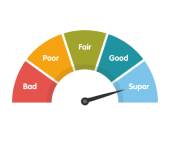
Applying for a loan blindly is a gamble. Always pull your own credit report first. Sometimes, there are errors in the report—like a loan you already closed still showing as "Active." Fixing these before you apply saves you from a rejection that stays on your record.
To make things easier, here is a quick checklist to keep in your pocket:
If you are a shop owner, a small-scale manufacturer, or a skilled professional who receives salary in cash, you’ve probably heard "No" from traditional banks. Big banks usually demand 3 years of ITR and formal salary slips—documents that many hardworking Indians simply don't have.
This is where Aavas Financiers changes the narrative.
Aavas specializes in the "informal" and "semi-formal" segments. They understand that a lack of paper doesn't mean a lack of income. Here is how they evaluate you differently:
Aavas doesn't just look at a computer screen. Their team often visits your place of work or business to understand your cash flow. If you run a small kirana store, they look at your registers, your stock, and your daily footfall to estimate your repayment capacity.
For the cash-salaried, Aavas accepts alternative proofs like salary certificates from the employer or even an analysis of your monthly household expenses and savings patterns.
While most lenders stay within city limits, Aavas has a deep-rooted presence in Tier II, III, and IV towns. They understand local property dynamics, making the technical and legal valuation of your home much smoother.
Whether you want to buy a plot, construct a house, or renovate (Home renovation loan) your existing one, they have specific products designed for people without formal income proofs.
At the end of the day, a home loan isn't just a financial transaction; it's a bridge to your dream. The key is to be prepared. By avoiding the common pitfalls of documentation and choosing a lender like Aavas that understands the "real" Indian economy, you are setting yourself up for success.
Don't let a lack of a salary slip stop you from building your home. Be honest with your disclosures, keep your records as clean as possible, and work with a partner that values your hard work over your paperwork.
Yes. While many banks require ITR, lenders like Aavas Financiers use "Income Estimation" methods. They evaluate your business turnover, cash registers, and physical assets to determine how much loan you can afford.
Not necessarily. While a score above 750 is ideal, some lenders look at the reason for a low score. If it was a one-time medical emergency and you've been regular since, you still have a chance. However, you might be charged a slightly higher interest rate. Check Your Credit Score for free Now!
Usually, you can get a loan for up to 75% to 90% of the property value. The remaining 10-25% must be paid by you as a "down payment" or "own contribution."
With proper documentation and a clear property title, Aavas can often provide an in-principle approval within a few days. The total disbursement usually takes 15-20 days, rest depending on legal checks.
Read More about : Home loan Disbursement Process, Difference between Loan Sanction and Disbursement